Devon Meier · 4 November 2026
Italy's Mountain Villages Preserve Ancient Folk Music Archives Through Community-Led Digitization Efforts
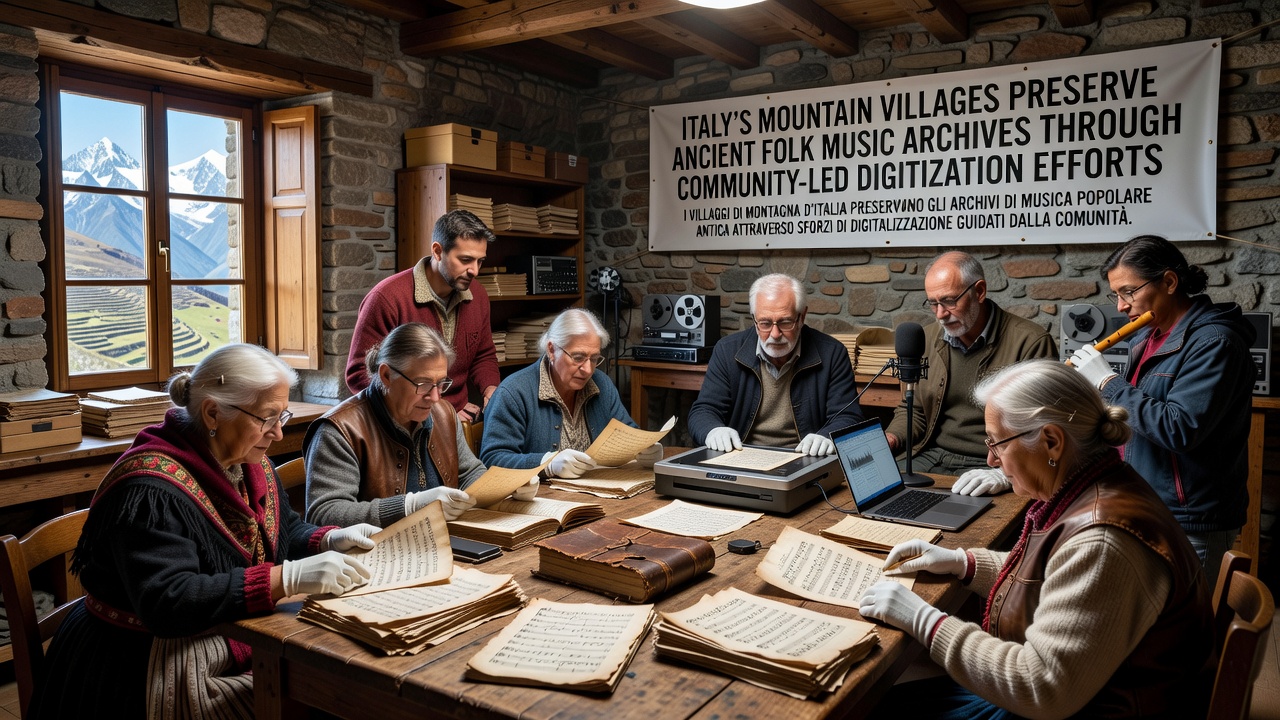
Remote villages scattered across Italy's Alpine adn Apennine ranges have maintained collections of folk music recordings, manuscripts, and instruments for generations, and these communities now coordinate large-scale digitization projects to safeguard the materials against physical decay and loss. Local volunteers, archivists, and regional cultural organizations work together on the initiative, which focuses on converting analog tapes, vinyl discs, and handwritten scores into searchable digital formats while preserving original artifacts in climate-controlled facilities.
Origins of the Archives and Regional Context
Many collections trace their roots to the mid-20th century when ethnomusicologists and village elders first captured performances during seasonal festivals and religious ceremonies, yet earlier oral traditions extend back centuries through family lineages and church records. Villages such as those in the Piedmont valleys and the Abruzzo highlands stored these items in town halls, parish buildings, and private homes, where temperature fluctuations and humidity gradually threatened their condition. Researchers from the Italian Ministry of Culture documented more than 12,000 hours of audio material across participating sites by 2024, with additional surveys scheduled for completion in November 2026 to update inventories before further environmental changes occur.
Community members began organizing formal working groups in 2018 after several villages reported damaged reels following unusually wet winters, and the effort expanded when regional governments allocated matching funds for equipment purchases and training workshops. Participants learned audio restoration techniques through programs supported by the European Commission's cultural heritage framework, which connects Italian groups with similar initiatives in Spain and France for knowledge exchange.
Digitization Process and Technical Methods
Teams follow standardized protocols that include high-resolution scanning of paper documents, 24-bit audio transfers at 96 kHz sampling rates, and metadata tagging based on international standards developed by the International Association of Sound and Audiovisual Archives. Each village designates a lead coordinator who schedules sessions around agricultural calendars, ensuring farmers and artisans can contribute during quieter months. Software tools developed at the University of Bologna allow remote quality checks, while local servers store encrypted backups that sync with a central repository hosted by the Piedmont Regional Archive.
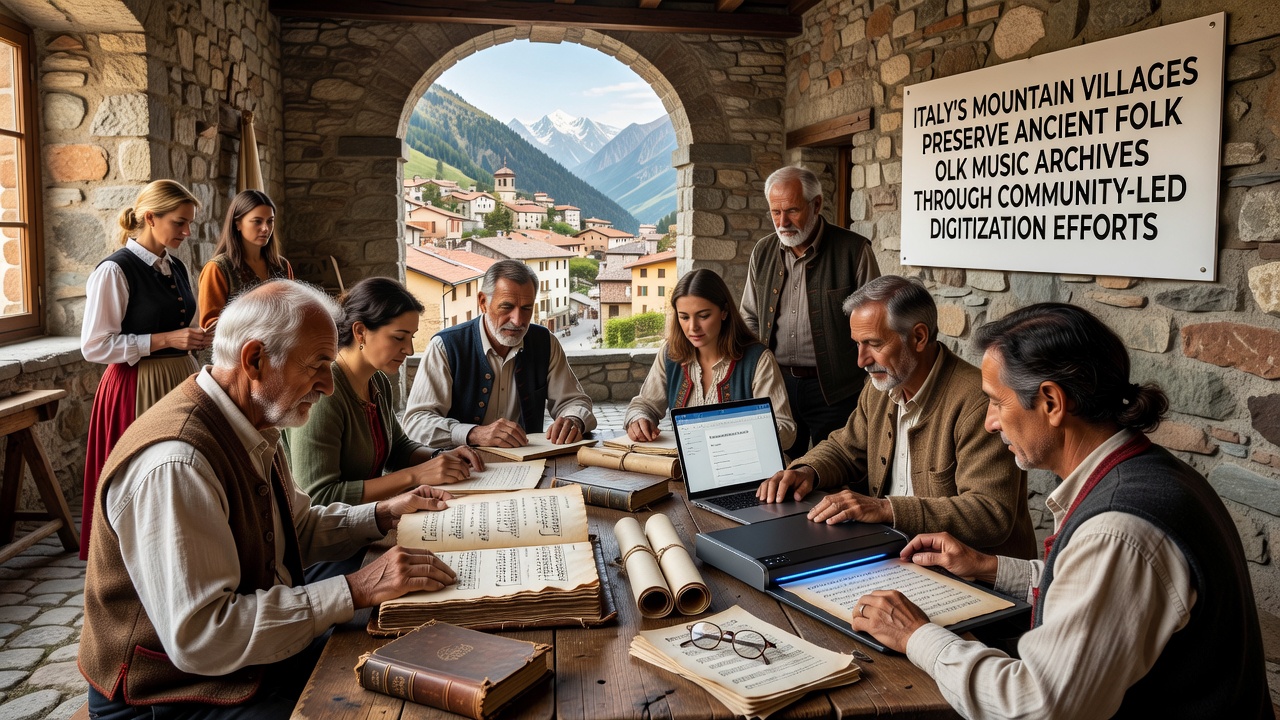
One study coordinated by the University of Melbourne's musicology department examined comparable projects in Australia and found that community involvement reduced error rates in metadata entry by nearly 40 percent compared with centralized institutional efforts alone. Italian teams apply similar principles by pairing experienced elders with younger volunteers who handle file naming and cross-referencing. The process also incorporates optical character recognition for handwritten lyrics in local dialects, which researchers then verify against audio samples during group listening sessions held in village squares.
Challenges Encountered and Solutions Implemented
Funding gaps and limited internet connectivity in higher elevations have slowed progress in some locations, although satellite links installed in 2023 improved data transfer speeds for participating sites. Experts note that dialect variations complicate keyword searches, prompting the creation of multilingual thesauri that map terms across Italian, Occitan, and Friulian languages. Legal considerations around copyright for recordings made before 1970 required consultation with Italy's Society of Authors and Publishers, which issued guidelines allowing non-commercial digital access under specific conditions.
Training sessions held in November each year address equipment maintenance and data security, and the November 2026 schedule includes a joint workshop with Canadian archivists from Library and Archives Canada who specialize in cold-climate storage solutions. These exchanges help address the unique preservation needs of magnetic tapes stored in unheated mountain buildings.
Access and Broader Impact
Once digitized, portions of the archives become available through a public portal managed by the Italian National Library, with restricted sections reserved for scholarly research requiring institutional credentials. Schools in nearby towns integrate selections into local history curricula, and performers use restored tracks to reconstruct instrumentation for contemporary festivals. Data from the project indicate that more than 8,500 individual items had been processed by mid-2025, with projections reaching 15,000 by the end of 2027 according to progress reports from the coordinating committee.
Conclusion
The coordinated work across Italy's mountain villages demonstrates how localized groups can sustain cultural preservation at scale when supported by technical training and regional partnerships. Ongoing efforts scheduled through November 2026 aim to complete remaining inventories while expanding public access features. Continued monitoring of environmental conditions and periodic technology upgrades will determine the long-term viability of both the digital and physical collections.