Devon Meier · 18 November 2026
Italy's Remote Hill Towns Integrate Solar Tech into Historic Stone Structures
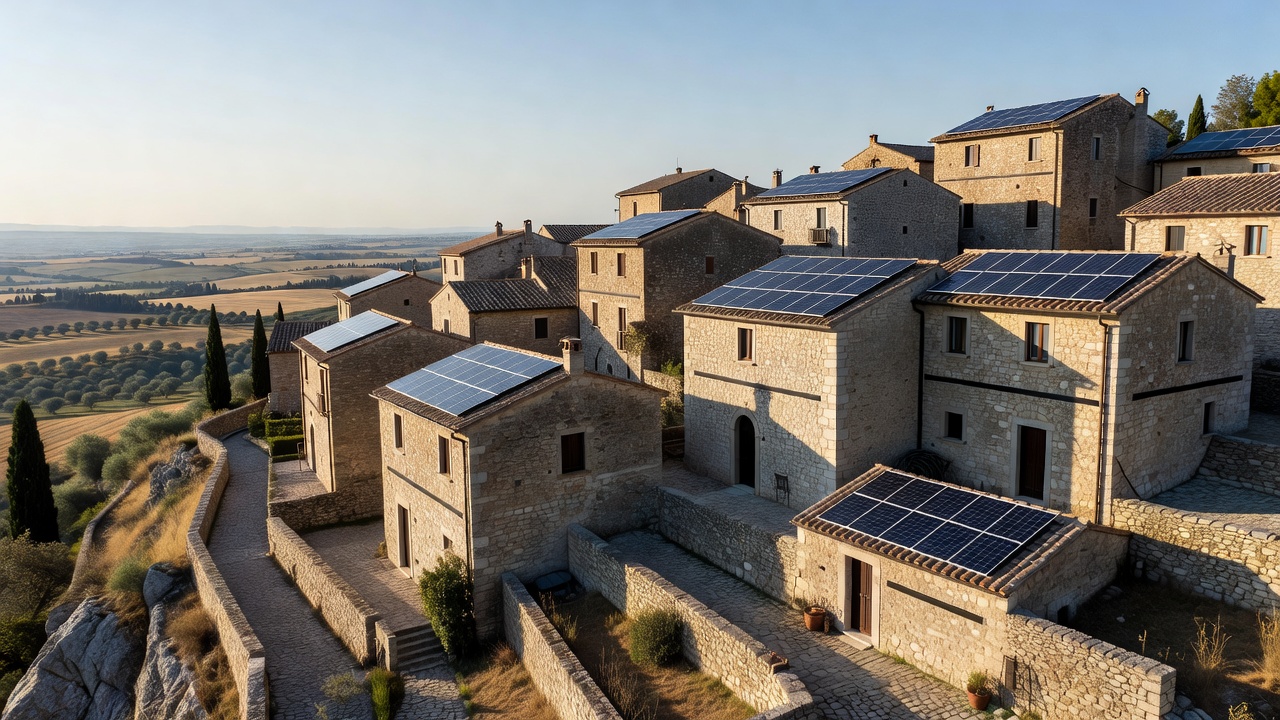
Remote hill towns across central and southern Italy have begun incorporating solar technology into centuries-old stone structures, and observers note that these projects balance energy needs with preservation requirements. Towns in regions like Umbria and Basilicata have tested systems that use thin-film panels and building-integrated photovoltaics designed to match local stone colors and textures, while data from Italy's national energy agency shows steady growth in such installations since 2023.
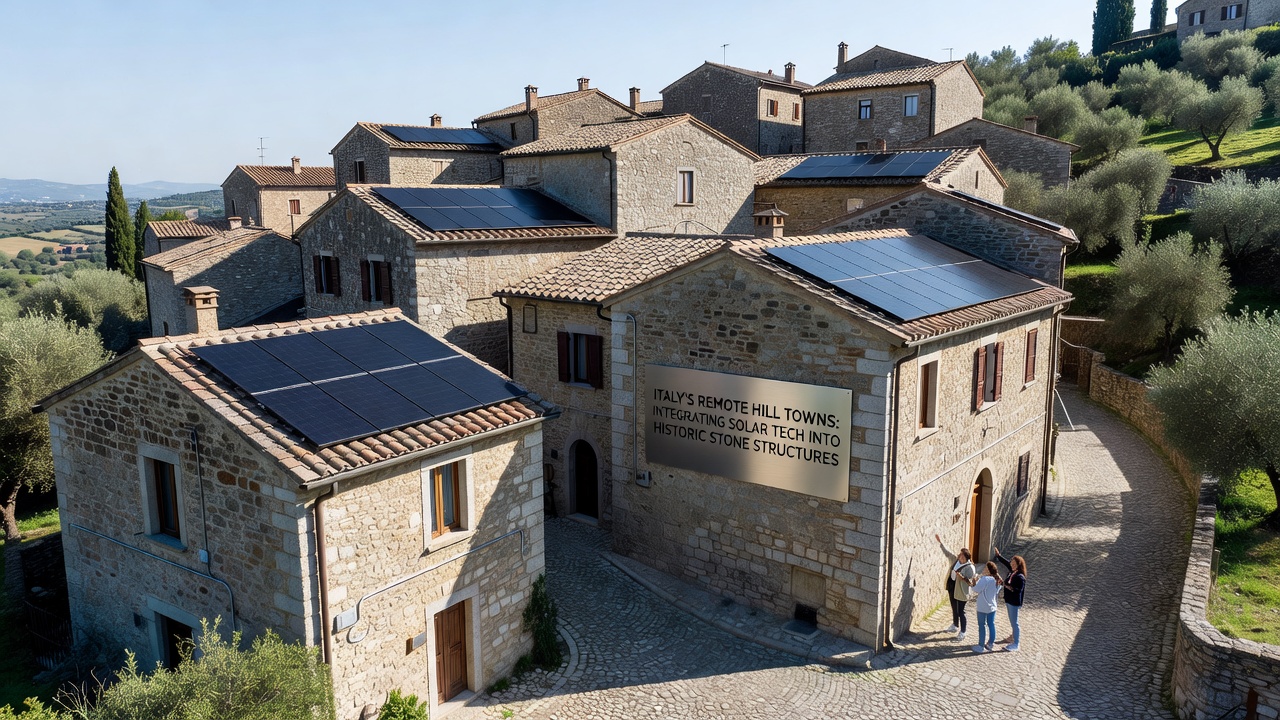
Engineers have developed mounting systems that attach to existing stone without drilling into load-bearing walls, and researchers at Italian universities have documented how these methods reduce structural stress. Projects in places like the hilltop settlements of Matera and smaller villages near Perugia demonstrate how solar arrays can power community grids while maintaining the visual character that draws visitors each year. In November 2026, several of these initiatives will reach key milestones, including the completion of a regional monitoring network that tracks energy output and weather impacts on the modified facades.
Technical Adaptations in Stone Architecture
Traditional stone buildings in these towns often feature thick walls and tiled roofs that limit conventional panel placement, yet specialists have created custom solutions such as solar tiles that replicate the appearance of local slate or limestone. Studies from the Polytechnic University of Milan indicate that these materials maintain thermal performance comparable to standard panels, and field tests reveal output levels that support lighting and heating for dozens of households per installation. What's interesting is how the technology avoids visible wiring by routing cables through existing drainage channels, which helps preserve the integrity of the historic fabric.
Local authorities coordinate with heritage offices to approve each project, and guidelines require color-matching and minimal protrusion from walls. One case in a town near Orvieto involved retrofitting a 12th-century church annex where engineers used flexible solar membranes that conform to curved stone surfaces, and results showed a 30 percent reduction in grid dependency within the first year of operation according to regional utility reports.
Community and Economic Impacts
Residents in these isolated communities often face high energy costs because of limited grid connections, so the shift toward on-site generation provides measurable savings. Data collected by Italy's Ministry of Economic Development tracks how participating towns have lowered electricity expenses by up to 25 percent, and the funds freed up support other maintenance needs. But here's the thing: success depends on training local technicians who understand both traditional masonry and modern electrical systems, and several vocational programs now include modules on these hybrid techniques.
Broader economic effects appear in tourism as well, since visitors express interest in seeing sustainable upgrades that respect cultural sites. Figures from the Italian National Institute of Statistics show increased bookings in towns that publicize their solar initiatives, and partnerships with research institutions help document the process for wider replication.
Policy Framework and Future Outlook
National and European regulations encourage such integrations through funding streams that prioritize heritage-compatible renewables, and the EU's Horizon Europe program has supported multiple pilot sites across Italy. Observers note that streamlined permitting processes introduced in 2024 have accelerated approvals, although each project still undergoes review by cultural protection agencies. A report from the International Renewable Energy Agency highlights how Italy's approach differs from other Mediterranean countries by emphasizing aesthetic continuity over rapid scale-up.
Challenges remain around long-term durability, since stone expansion and contraction can affect panel adhesion, and ongoing monitoring in November 2026 will provide new data on performance through seasonal changes. Experts continue to refine adhesives and sealants based on laboratory simulations that replicate decades of weathering in accelerated tests.
Conclusion
Italy's remote hill towns continue to demonstrate practical methods for combining solar technology with historic stone construction, and the results offer models that other regions may examine. As projects advance through 2026 and beyond, the focus stays on measurable energy gains alongside strict adherence to preservation standards, supported by data from government agencies and academic studies.